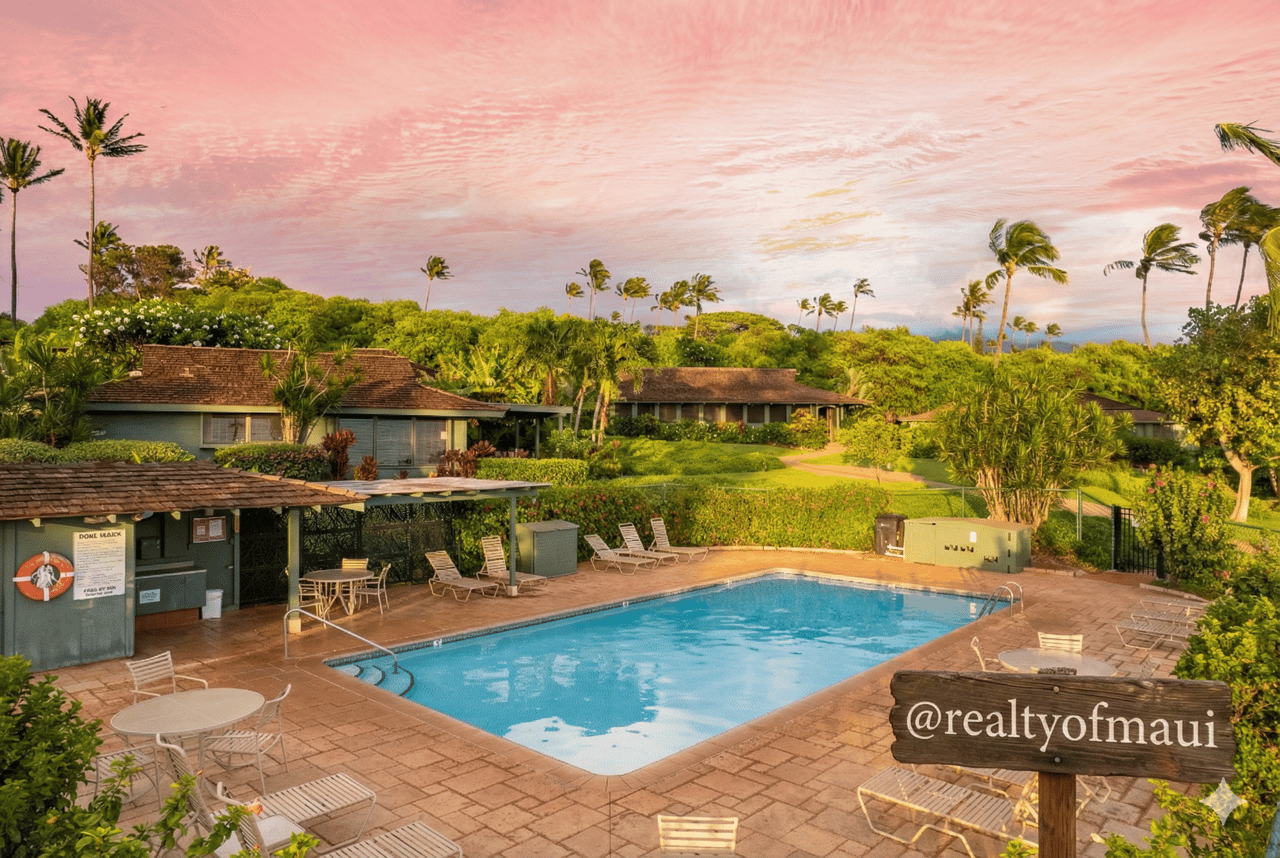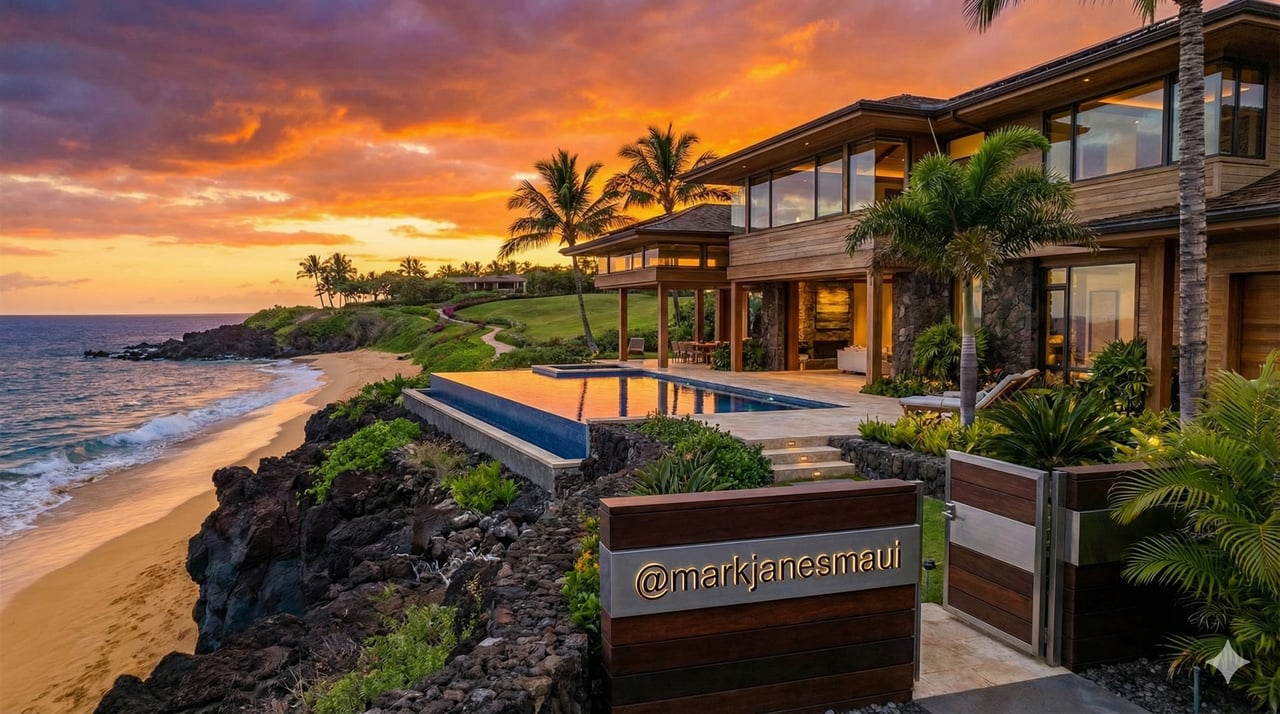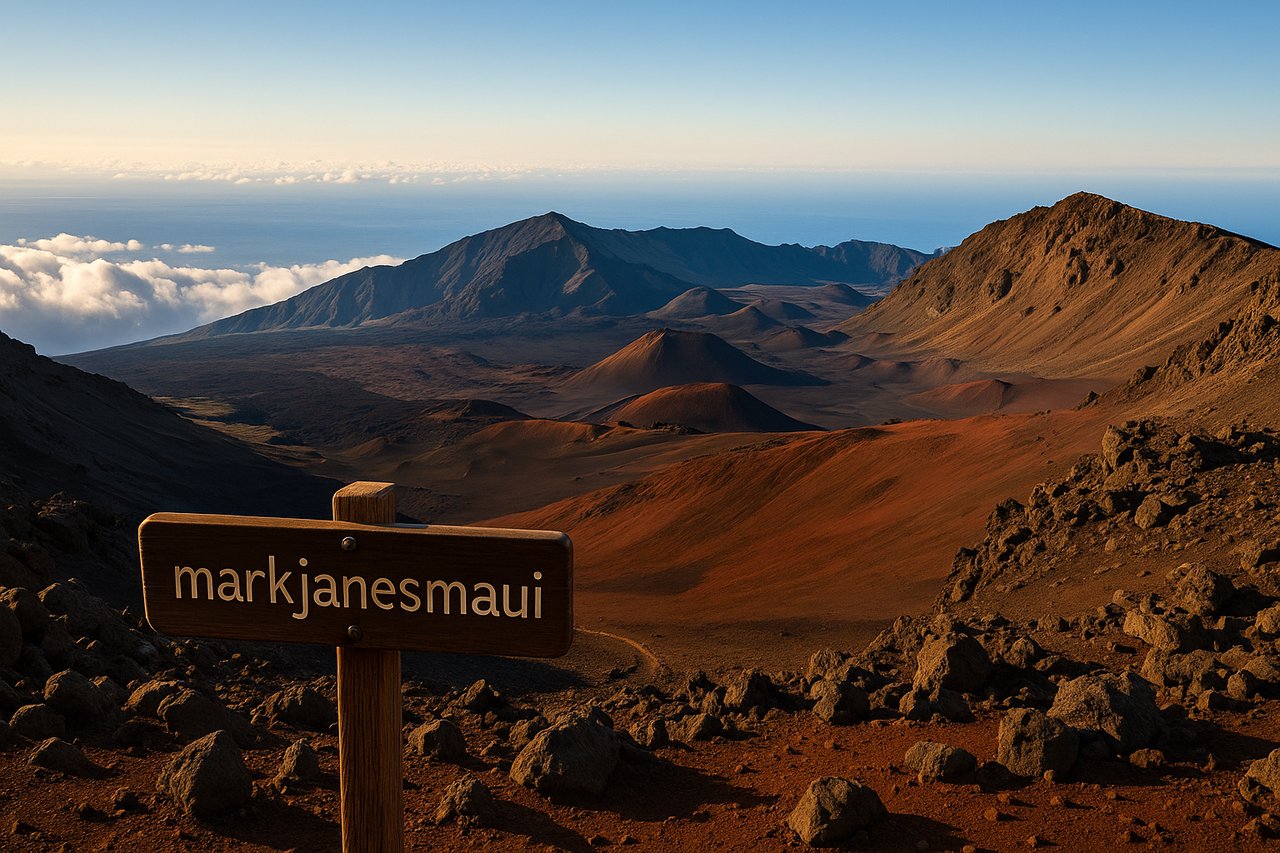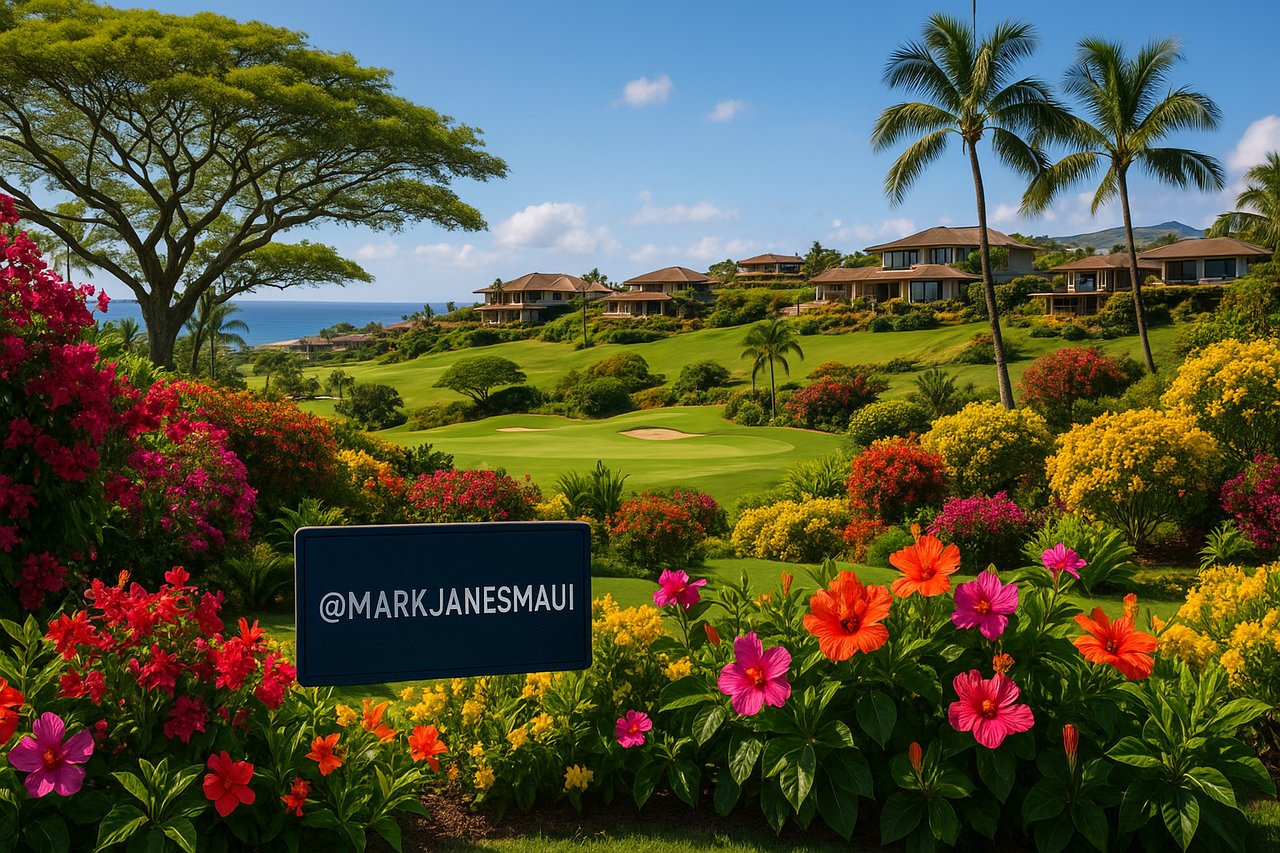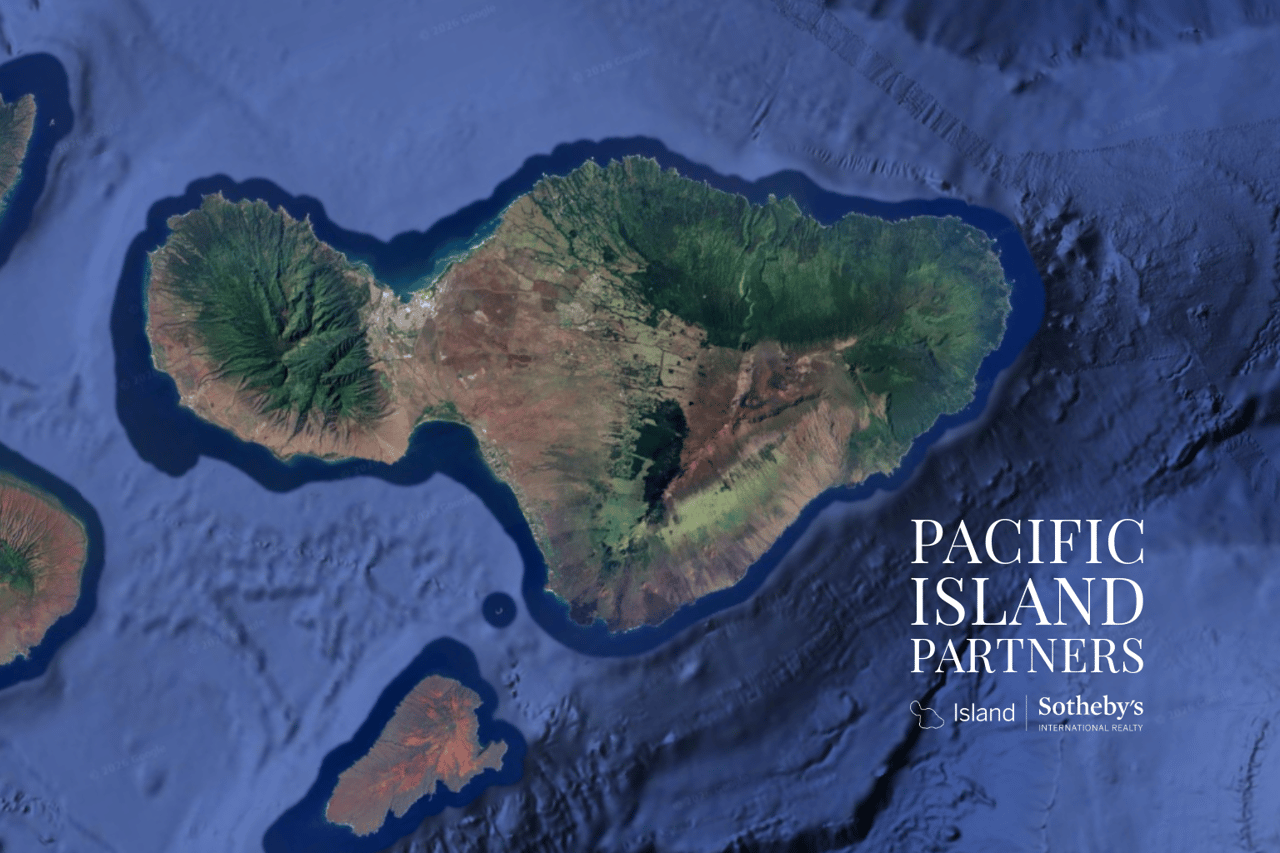
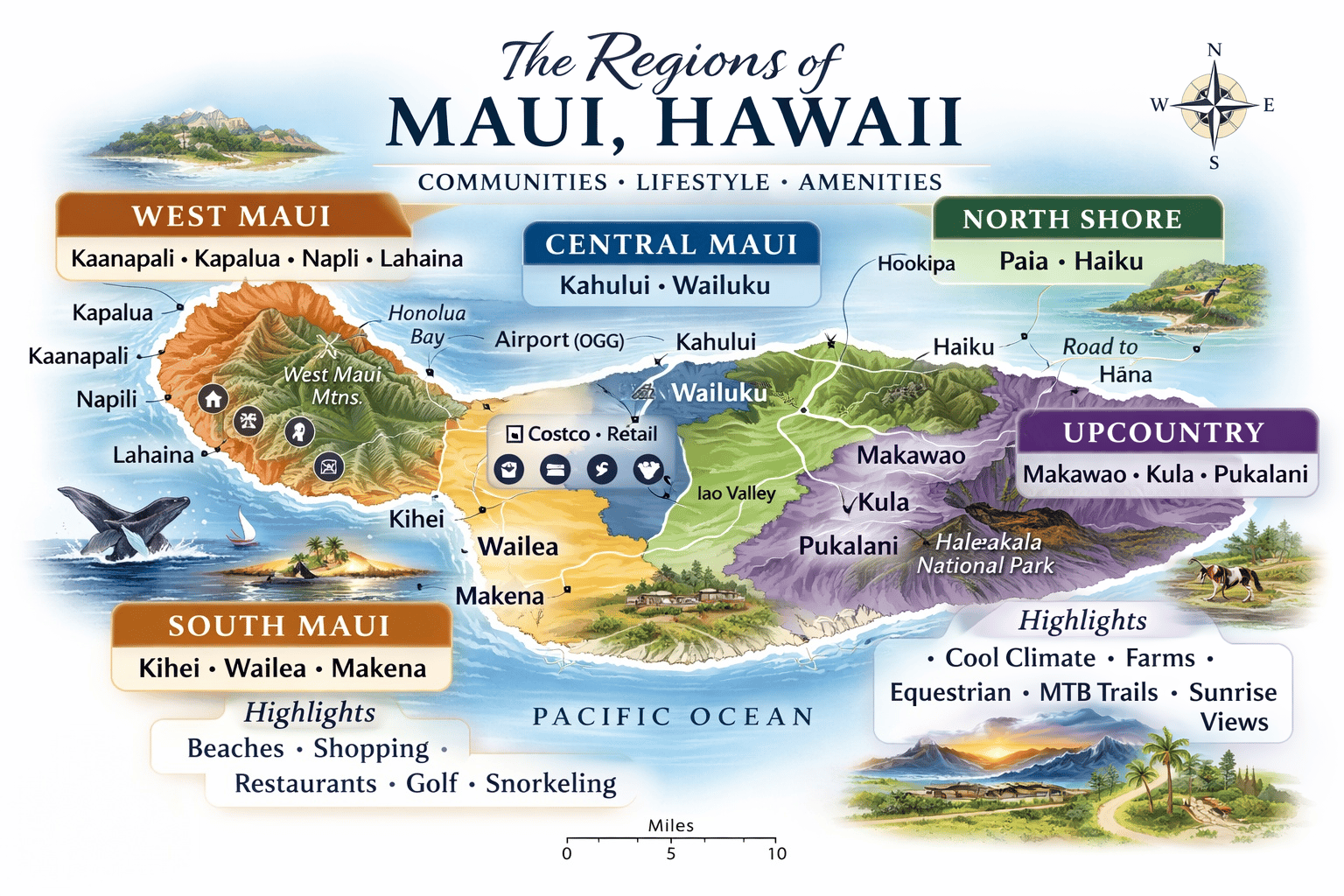
Maui may be a single island, but it lives like five distinct regions. Climate shifts dramatically within short distances. Drive times vary. Community character changes from coastal to agricultural to commercial within a matter of miles.
Where you live here shapes your daily rhythm — how far you drive for groceries, how quickly you reach the hospital, whether your evenings are spent at the beach, on a mountain trail, or in open pastureland.
Below is a deeper look at Maui’s primary residential areas, including practical infrastructure and access to outdoor activities such as mountain biking, horseback riding, hiking, surfing, sailing, and more.
West Maui: Coastal Living with Mountain Access
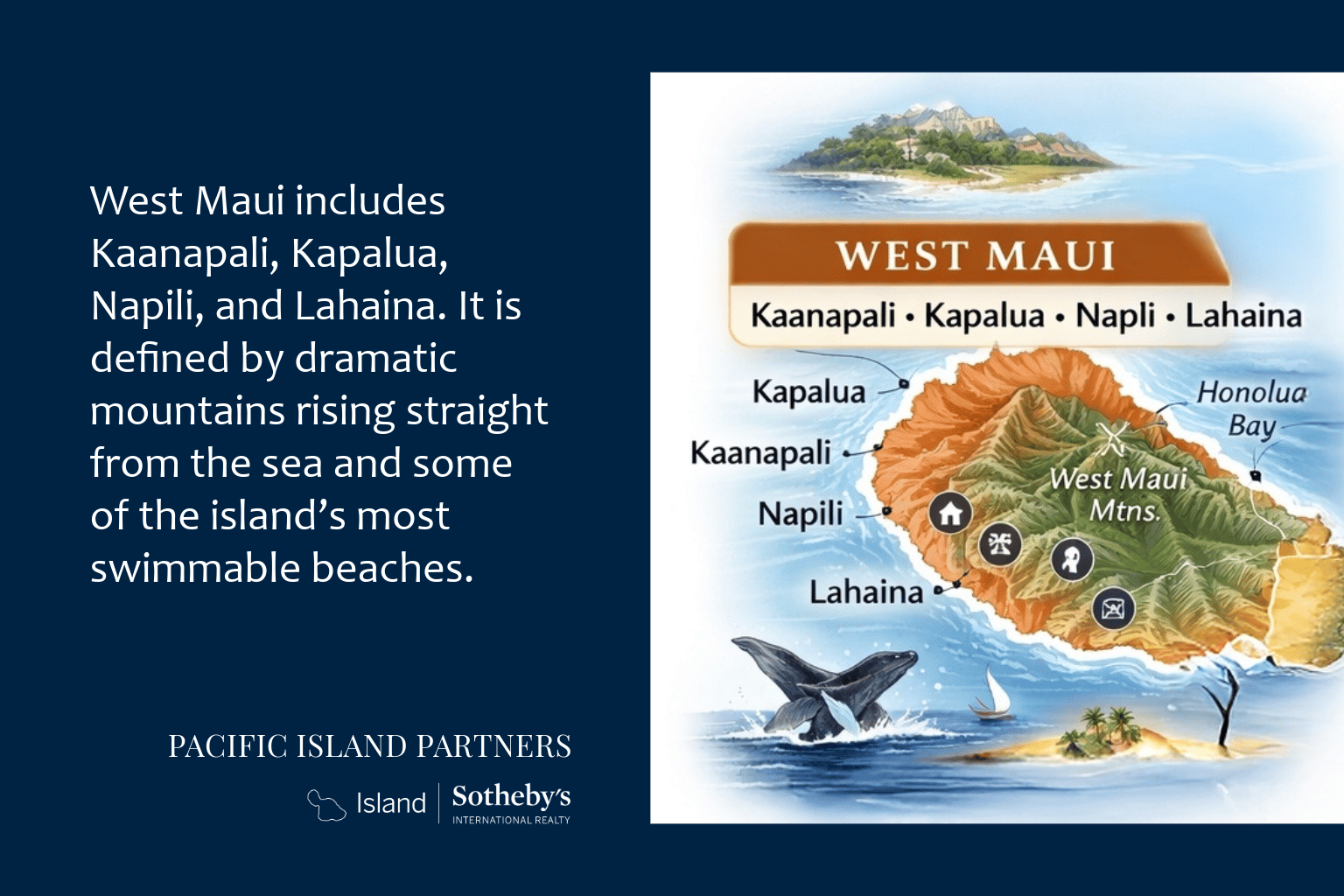
West Maui includes Kaanapali, Kapalua, Napili, and Lahaina. It is defined by dramatic mountains rising straight from the sea and some of the island’s most swimmable beaches.
Daily life here revolves around the water. Residents surf at Honolua Bay, snorkel at Kapalua, paddle canoe, sail from Kāʻanapali, and gather at beach parks in the evenings. During winter, whale watching becomes part of the seasonal rhythm.
The West Maui Mountains also offer hiking trails and ridge walks with sweeping views. While formal mountain bike infrastructure is more concentrated elsewhere on the island, there are rugged trails and off-road routes for experienced riders.
Grocery stores such as Safeway, Foodland, and neighborhood markets serve everyday needs, and local Ace Hardware stores support home maintenance. Larger warehouse trips, major construction supplies, specialty medical services, and the main hospital — Maui Memorial Medical Center — require a drive of approximately 45 to 60 minutes to Central Maui. The airport is a similar distance.
Schools such as Lahainaluna High School and Maui Preparatory Academy anchor the community.
West Maui suits those who want immersive ocean living with mountain backdrops and a strong coastal identity.
South Maui: Sunshine, Beaches, and Quick Island Access
South Maui includes Kihei and Wailea. It is known for dry weather, consistent sunshine, and accessible coastal living.
Beach parks stretch for miles, and daily life often includes paddleboarding, snorkeling at Ulua or Mākena, and sailing departures from Māʻalaea Harbor. Whale watching tours operate from nearby harbors in season.
The terrain here is flatter than other regions, making biking and running accessible. Coastal trails, particularly in Wailea, provide scenic walking routes.
South Maui’s infrastructure is convenient. Safeway, Foodland, and Island Grocery Depot are centrally located. Hardware stores and nurseries support homeowners, and major home improvement supplies are about 25 to 30 minutes away at The Home Depot in Kahului. The airport and Maui Memorial Medical Center are also within a similar drive time.
Schools including Kihei Charter School serve local families.
South Maui offers beach-centered living with strong connectivity to the rest of the island.

Upcountry: Elevation, Agriculture, and Trail Access
Upcountry encompasses Makawao, Kula, and Pukalani along the slopes of Haleakalā. Elevation brings cooler temperatures and expansive bi-coastal views.
This region is the center of Maui’s equestrian and mountain biking communities. The Makawao Forest Reserve is a dedicated mountain bike destination with established trail systems. Horseback riding is part of daily life in many areas, and boarding facilities are common. Large lots and agricultural zoning support barns, paddocks, and gardens.
Hiking access is immediate, including trails within Haleakalā National Park, which offers both summit and crater hikes.
Grocery shopping is handled locally through Foodland in Pukalani and small-town markets in Makawao, while warehouse stores and specialty retail are about 15 to 25 minutes downhill in Kahului. Local hardware stores support routine needs, with major supplies available in Central Maui. Maui Memorial Medical Center is typically within 20 minutes of most neighborhoods.
Schools such as Seabury Hall and King Kekaulike High School are established institutions in the region.
Upcountry provides space, trail access, equestrian culture, and a cooler climate.

North Shore: Surf Culture and Lush Terrain
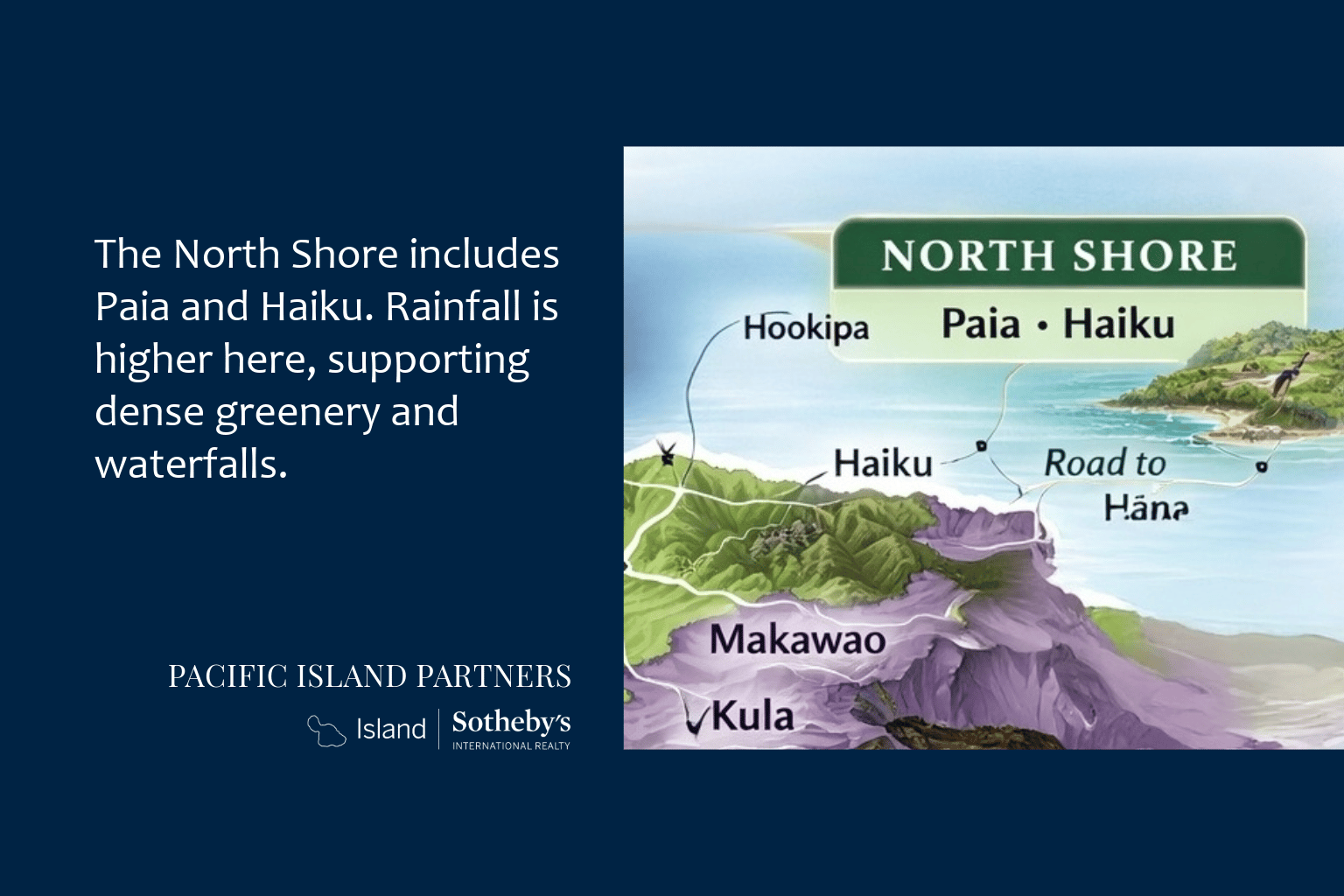
The North Shore includes Paia and Haiku. Rainfall is higher here, supporting dense greenery and waterfalls.
Ho‘okipa is internationally known for windsurfing and surfing. Residents also enjoy jungle hikes and scenic drives along the Road to Hana. Cycling routes along Hana Highway are popular among road cyclists.
Paia offers Mana Foods and a cluster of boutiques and restaurants, while Haiku properties are more rural and spread out. Larger grocery and hardware trips typically involve a 20-minute drive to Kahului. The airport and Maui Memorial Medical Center are nearby.
North Shore living emphasizes connection to ocean sports, rainfall-fed landscapes, and outdoor exploration.
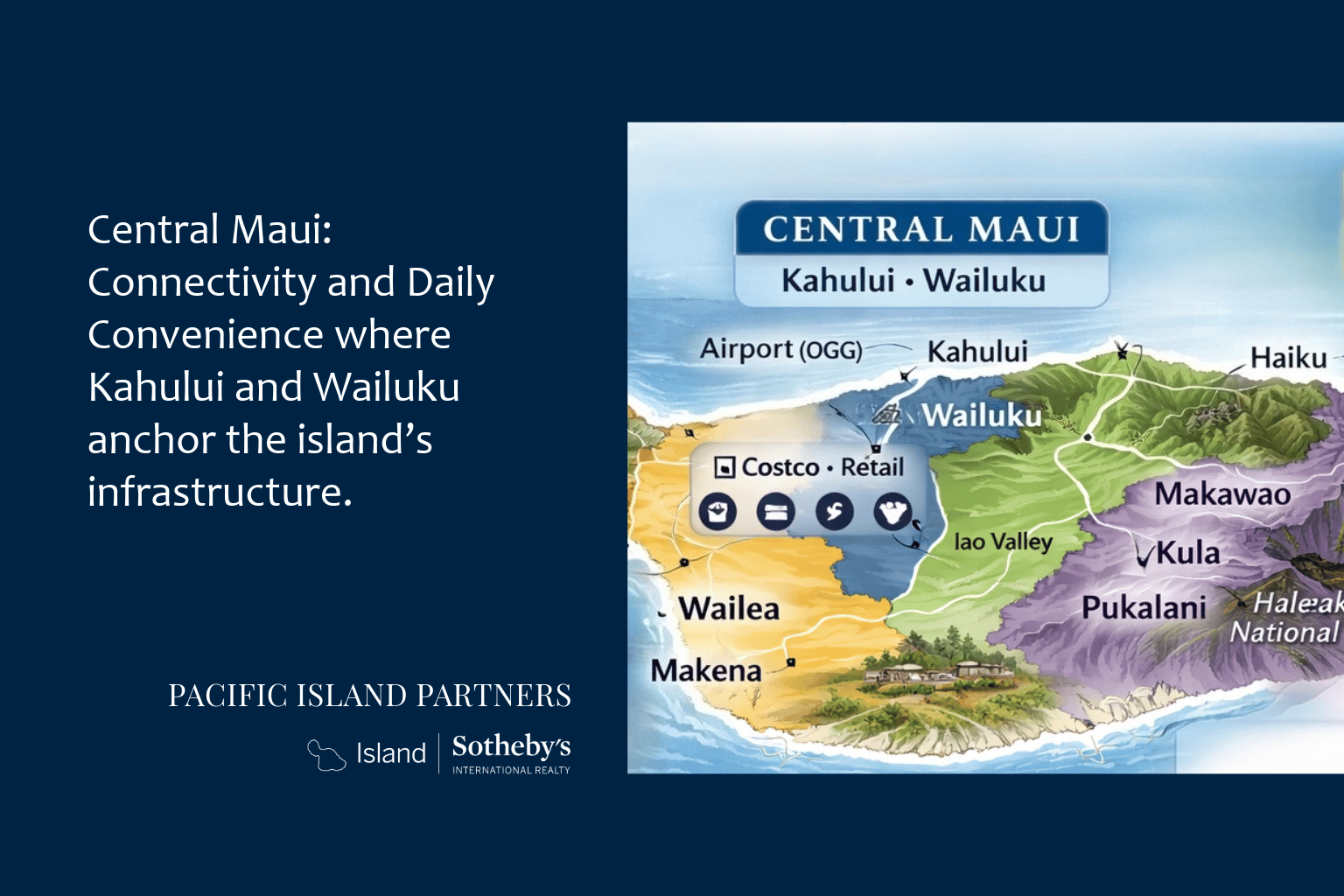
Central Maui: Connectivity and Daily Convenience
Kahului and Wailuku anchor the island’s infrastructure.
This is where most large retailers are located, including Costco, Safeway, Target, and The Home Depot. Maui Memorial Medical Center is based here, and the airport is minutes away.
While Central Maui is more commercial in character, it also provides quick access to ʻĪao Valley hikes and serves as a central launching point to all other regions.
Schools such as Baldwin High School serve established neighborhoods.
Central Maui offers efficiency, connectivity, and access to the island’s core services.
The Island in Perspective
Final Thoughts from Me
At the end of the day, choosing where to live in Maui is deeply personal. Each region—and every corner of it—offers a different rhythm, a different feeling, and a different version of island life. My role is to help you understand those nuances so you can find the place that truly fits how you want to live, whether that’s oceanfront sunsets, cool upland breezes, quiet rural acreage, or the convenience of being close to everything. If you’re exploring what life in Maui could look like for you, I’m here to guide you, share insights from living and building here, and help you find a home that aligns with your vision of island living.
Frequently Asked Questions About Living on Maui
What is the best area to live on Maui?
The best area depends on lifestyle preference. West Maui offers beachfront living, South Maui provides sunshine and convenience, Upcountry offers land and cooler climate, North Shore emphasizes greenery and surf culture, and Central Maui provides access to infrastructure.
Is Upcountry Maui good for families?
Yes. Upcountry offers larger lots, access to Haleakalā trails, equestrian facilities, and respected schools such as Seabury Hall.
Which Maui region has the best outdoor access?
Upcountry leads for mountain biking and horseback riding, West Maui for ocean activities, and North Shore for surfing and rainforest hikes.
Is Central Maui good for convenience?
Yes. Central Maui is home to the airport, Costco, Target, Home Depot, and Maui Memorial Medical Center.